


What are the Others up to?

Stations of Representation of the Alien
“Home” is the name of the competition for films under three minutes at this year's festival. Home is the place where you say “we”, where you know your way around and where solid meals made of meat are what's for dinner. The opposite of home is abroad, the place where the Others are living. Usually, good food can be had there as well, but you can never be too sure, and you have to be careful that the meat on your plate doesn't turn out to be a dead dog. We are approaching this renegotiation of home in a special programme of the 23rd Hamburg International Short Film Festival.
In the early days, short films were common due to technical constraints. But soon features gained the upper hand in the anthropological field. Short ethnographic films reached their apex within the scientific project Encyclopedia Cinematographica of the Götting Institute for Scientific Film. Within this scientific project from the 1950s, which had been initiated by Konrad Lorenz and others, several thousand films of about two minutes each were created, in which distinct activities, phenomena and actions were recorded and catalogued. Today, however, the short film is mainly limited to students’ films.
Because of this gap between the practice of ethnographic imaging and the length of shorts, our programme operates in a void inherent in the genre. It is of little wonder then, that the great names of ethnographic filming make no appearance here.
The programming aims to show the change in technical aspects of the recording and the patterns of portrayal and the subjects of ethnographic films. From the silent pictures with its limited potential for explanation and the charm of a big game hunt, to the dubbed film with its authoritarian commentary, then to films with sound recordings, which allowed the Others to articulate themselves and interpret their actions themselves. The emergence of the claim of authenticity can be displayed along with the development of recording equipment. While the directors of early documentaries were forced to re-enact scenes from a distance because of the unwieldy equipment and a lack of photosensitivity of the filming material, hand-held cameras allowed them to get closer to the protagonists. This way, it was suddenly possible to suggest that the material had not been staged.
In the 90 years of technical and aesthetical development this programm traces, also the contents of the film have changed. While the shorts were originally focussed on the exotic, dance and ritual, they turned their attention to daily lives and the quest for the alien within oneself by means of an anthropology at home.
Incidentally, we are not intending to give an answer to the questions of what ethnographic film represents and whether it is defined by the methods, objects or the fields of studies of the filmmakers. All we can say is that we are showing films about the Others, the Alien- and this includes un-ethnographic films as well.
|
What are the Others up to? is supported by |
|


What are the Others up to? 1
Thursday, 7 June, 17.30 h, zeise 2
Sunday, 10 June, 19.30 h, B-Movie
| |
| |
| |
| |
| |
| |
| |
| |
| |
| |
| |
| |
| |
| |
| |
|
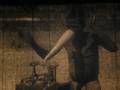
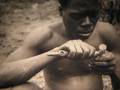
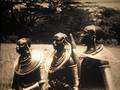
Buschmann spricht in den Phonographen (Bushman Speaks Into the Phonograph)
Rudolf Pöch, Austria 1908/1987
Documentary, 03:30 Min., without dialogues
Handwerke und Fertigkeiten in N. O. Angola (Arts and Crafts in Northeastern Angola)
Hermann Baumann, Germany 1930/1937
Documentary, 07:30 Min., without dialogues
Tanz der Massaifrauen am Dugum in der Süd-Serengeti, Ostafrika (Dance of the Masai Women on the Dugum in the South Serengeti, East Africa
Ludwig Kohl-Larsen, Germany 1934-39/1941
Documentary, 02:30 Min., without dialogues
Spare Time
Humphrey Jennings, England 1939
Documentary, 15:00 Min., English OV
Tempo di Raccolta
Luigi Di Gianni, Italy 1966
Documentary,14:00 Min., Italian OV with German ST
Unsere Afrikareise (Our Africa Trip)
Peter Kubelka, Austria 1966
Experimental, 12:30 Min., without dialogues
Tourou et Bitti: Les tambours d’avant
Jean Rouch, France 1971
Documentary, 12:00 Min., French OV with English ST
Kulli Kulli
Judith Lewis, Benin / Germany 1995/96
Documentary, 03:33 Min., Italian OV
What are the Others up to? 2
Thursday, 7 June, 19.45 h, 3001
Monday, 11 June, 19.30 h, B-Movie
| |
| |
| |
| |
| |
| |
| |
| |
| |
| |
| |
|
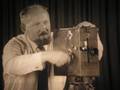
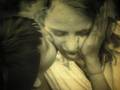
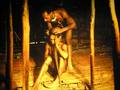

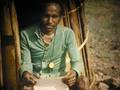
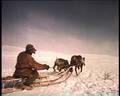
Neu-Guinea 1904-1906 – In memoriam Professor Dr. Rudolf Pöch
Rudolf Pöch, Austria 1904-06/1958
Documentary, 15:30 Min., German OV with English ST
Yanomami, Ihiramawetheri, Kashorawetheri, Venezuela, Oberer Orinoko – Erstbegegnung mit weißer Besucherin (Yanomami, Ihiramawetheri, Kashorawetheri, Venezuela, Upper Orinoco – First Contact with a White Female Visitor)
Irenäus Eibl-Eibesfeldt, Germany 1969/1995
Documentary, 10:30 Min., without dialogues
Bime, West-Neuguinea, Zentrales Hochland – Magische Behandlung von Kopfschmerzen mit einem Stein
(Bime, West New Guinea, Central Highlands – Magic Treatment of Headache with a Stone)
Gunter Konrad, Germany 1975/1989
Documentary, 05:00 Min., German OV with English ST
Jero on Jero: A Balinese Trance Séance Observed
Linda Connor, Timothy Asch & Patsy Asch, Australia 1986
Documentary, 17:00 Min., Balinese OV with English ST
Eipomek 1986
Thomas Michel, Germany 1986/1989
Documentary, 12:00 Min., German OV with English ST
Koral
Vladimir Eisner, Russia 1994
Documentary, 20:00 Min., without dialogues
From Jack Stevenson's Archives: Experiments in Travel
“Where did you get these films?”
That is the one question that the Denmark-based american film collector and b-movie-archeologist Jack Stevenson is constantly asked when presenting programs from his archive to the unsuspecting public. The 23. Hamburg ISFF will show a selection according to the topic "What are the Others up to?".
Experiments in Travel
“This is a diverse group of films from different time periods (the 30’s to 70’s). They have very different agendas and dramatic structures but they are all travelogues of a kind with ethnographic overtones in a distinctly American style. They all look with a hostile or paternalistic gaze upon various foreign societies, but whatever racial or cultural messages they attempt to transmit they ultimately say much more about America itself.
It would seem logical to present these films by subject (War, drugs, jungle excursions, etc.) but I wanted to avoid such groupings. I wanted to de-emphasize the specific historical content of the individual films and focus on the form of the ethnographic travelogue as a gathered whole, and include films not normally considered to be a part of this genre. Thus I have arranged this selection chronologically. (While the package should be approached as a whole rather than the sum of its parts, some of the films are so powerful that they will inevitably stick in the viewer’s throat.)
This program is not intended to impart any message or deliver a lesson. I imagine each audience member will get from it something different.”
Jack Stevenson
Experiments in Travel
Friday, 8 June, 19.30 h, Lichtmeß
Saturday, 9 June, 21.45 h, B-Movie
| |
| |
| |
| |
| |
| |
| |
| |
| |
| |
| |
| |
| |
|
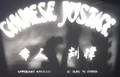

Chinese Justice
Mink De Ronda, USA 1937
Documentary, 5:00 min, English OV
Sinister Menace
Dwain Esper, USA 1939
Documentary, 10:00 min, English OV
Trailer: Malamu
unknown, USA
Trailer, 5:00 min, English OV
Your Job in Germany
Frank Capra, USA 1945
US-Army instruction film, 15:00 min, English OV
Trailer: Naked Amazon
Zygmunt Sulistrowski, Brasil 1954
Trailer, 5:00 min, English OV
Know your Enemy: The Viet Cong
unknown, USA 1968
US-Army instruction film, 18:00 min, English OV
Continental Holiday
unknown, USA 1970
Image film, 10:00 min, English OV


